Showing posts with label History. Show all posts

Tuesday, July 28, 2026

Operation Satanique: How France’s Rainbow Warrior Attack Blew Up in Its Face

The Spy Job That Blew Up

France sent elite secret agents halfway around the world to silence a protest ship. Instead, they killed a photographer, exposed their own spies and handed Greenpeace its greatest publicity victory.

It was intended to be a discreet act of sabotage. Instead, the sinking of the Rainbow Warrior became one of the most spectacular intelligence own goals of the Cold War.

Friday, May 1, 2026

The last stand of Captain Thunderbolt


The morning of 25 May 1870 broke cold and grey over the New England tablelands of New South Wales. Frederick Ward, the man the colonies knew as Captain Thunderbolt, had seen too many such dawns to fear them. For nearly seven years, he had outrun every trooper sent after him, slipping through the ranges like smoke, robbing coaches and stations with a courtesy that made him almost a folk legend. Almost.

Saturday, April 25, 2026

Furphy: How a Water Cart Became Australia’s Word for a Tall Tale


It is one of those peculiarly Australian words that seems to have rolled easily off the tongue for generations. Call something “a furphy” and most Australians will instinctively understand: it is a rumour, a tall story, something not quite to be trusted. But the origins of the term are as solid and practical as cast iron.

Friday, April 24, 2026

Captain Moonlite: The Bushranger Who Died for Love


The end came not in a blaze of outlaw glory, but in the grey light of a cold June morning in 1880, near the lonely outpost of Wantabadgery, in the Riverina district of New South Wales.

Wednesday, September 10, 2025

Life-Size Lancaster Bomber Sculpture Takes Flight in Nottinghamshire-Lincolnshire Border


A monumental tribute to RAF Bomber Command's legacy has taken shape on the Nottinghamshire-Lincolnshire border. The "On Freedom's Wings" sculpture, a full-scale replica of a Lancaster Bomber, has been erected near Norton Disney, overlooking the A46. This £1 million project, seven years in the making, stands 29 meters tall with a wingspan of 31 meters, weighing approximately 100 tonnes.

Sunday, June 1, 2025

How did a few Japanese planes destroy a British fleet


"The Depths of December offers a concise yet impactful exploration of one of the most significant naval battles in World War II. This 12,000-word account details the confrontation between the British Far East Fleet and the Mitsubishi Bombers from the 22nd Flotilla of the Imperial Japanese Air Service, taking place off the coasts of Singapore and Malaya. The narrative is delivered with vigor and authority by the accomplished author, Stu Lloyd.

Friday, February 28, 2025

The capture of German Tiger 131 in Tunisia

Tiger

The capture of German Tiger tank 131 in North Africa is a fascinating story. In April 1943, during the Tunisian campaign of World War II, the tank was part of the Schwere Panzer-Abteilung 504, a German heavy tank battalion.

Friday, February 21, 2025

The fascinating history of Taxi Cabs


The first taxi was launched in 1907 by businessman Harry N. Allen through his company, New York Taxicab Company. These were the first fleet of gasoline-powered cabs. The taxis were imported from France and equipped with “taximeters” to charge fees based on mileage. Drivers dressed like West Point cadets manned the taxis, which were originally painted red and green.

The First Yellow Taxi Company

A Chicago entrepreneur John Hertz, in 1915, opened the first Yellow Cab Company in his city. While choosing the best colour for the cabs, Hertz commissioned a local university study by the students of the University of Chicago to “scientifically ascertain which colour would stand out strongest at a distance,” per his biographer—and yellow won. To date, colour researchers agree that yellow is the most visible colour, though some have suggested that it’s chartreuse that the eye most easily detects. Thus, the first-ever yellow taxi emerged, and the idea stuck from then on.

1925 Yellow Cab

This story ignores the fact that yellow taxis had already appeared in various American cities before 1915. Businessman Albert Rockwell was operating a fleet of yellow cabs since 1909, as Yellow Taxicab Co. in NYC. Legend has it that Rockwell was merely appeasing his wife, Nettie, who preferred the colour.

Now, according to the law, all medallion cabs must be yellow, and any other vehicles for hire can be any colour besides yellow.

Cabs Around the World

In some cities, like London for example, cabs have always been historically black, and that has not changed since the 17th century when they used a horse and carriage. The iconic history of these cabs makes them stand out without having to be bright yellow!

So now the next time you see a taxi, you will know where its color came from!

Tuesday, February 11, 2025

1946 Bikini Atoll Atomic Bomb Test [video]


The 1946 Bikini Atoll Atomic Bomb Test, codenamed Operation Crossroads, was a pivotal event in history. It was a series of two nuclear tests conducted by the United States at Bikini Atoll in the Marshall Islands. The tests aimed to assess the effects of nuclear explosions on naval ships and to demonstrate the power of atomic bombs.

Thursday, January 16, 2025

Where is Spitbank Fort and what was it used for?


Spitbank Fort played a significant role during World War II, primarily serving as part of the coastal artillery defence system. Its strategic location in the Solent, near Portsmouth, allowed it to contribute to the protection of the vital naval base and dockyards.

Monday, December 30, 2024

Was US Army Gen. George S. Patton assassinated?


General George S. Patton died on December 21, 1945, due to complications from injuries sustained in a car accident in Mannheim, Germany, on December 9, 1945.

Saturday, December 14, 2024

The famous topless duel between two aristocratic princesses


"The Scandalous Duel of the Aristocratic Divas!"

Vienna, 1892 – High society was left reeling this week as news spread of an extraordinary duel between two of the most glamorous women of the Austro-Hungarian Empire. Princess Pauline von Metternich, a fiery aristocrat known for her sharp wit and sharper temper, clashed in a sword fight with Countess Anastasia Kielmannsegg, a rival noblewoman with an equally fearsome reputation. The reason? A petty feud over floral arrangements at a charity gala spiralled into a matter of honour that only blood could resolve!

The scandalous event took place in a secluded grove near Vaduz. Attendees—yes, there were witnesses to this shocking spectacle—included other society ladies who dared not intervene. Most shocking of all, the duel was conducted topless, a detail that has tongues wagging from Vienna to Paris. Sources claim this bizarre arrangement was at the insistence of their seconds, women themselves, who feared clothing might infect any wounds.

Under the watchful eye of Baroness Lubinska, a renowned advocate of women’s rights and, it seems sword duels, the combatants squared off. The Princess, her hair swept back into a severe bun, wielded her blade with the precision of an artist, while the Countess, younger and reportedly more athletic, displayed raw aggression. Spectators described the clash as “more savage than genteel,” with both women sustaining cuts and drawing blood.


Though the Countess lunged with dramatic flair, Princess Pauline ultimately triumphed, slashing her opponent across the forearm and forcing her to yield. Both women, bloodied but unbroken, reportedly embraced after the duel, declaring the matter resolved. Society insiders speculate the real tension between the two stemmed not from flowers but whispers of jealousy and competition in Vienna’s glittering ballrooms.

Predictably, the duel has sent shockwaves through the Empire. Critics have decried it as a disgrace to nobility, while feminists hail it as a bold statement of women’s independence. The scandal has only boosted Princess Pauline’s infamy, with some already calling her “the Swordswoman of Vienna.”

What’s next for the fierce princess and her vanquished rival? Will Countess Anastasia seek revenge, or has the sword settled the score? One thing is certain: high society will never forget this daring display of aristocratic vengeance.

Saturday, November 23, 2024

The face of the Statue of Liberty


 Isabella Eugenie Boyer was a French woman who lived a life of luxury and tragedy. Here's a brief overview of her life story:

Tuesday, November 12, 2024

Nuclear submarine strikes underwater mountain


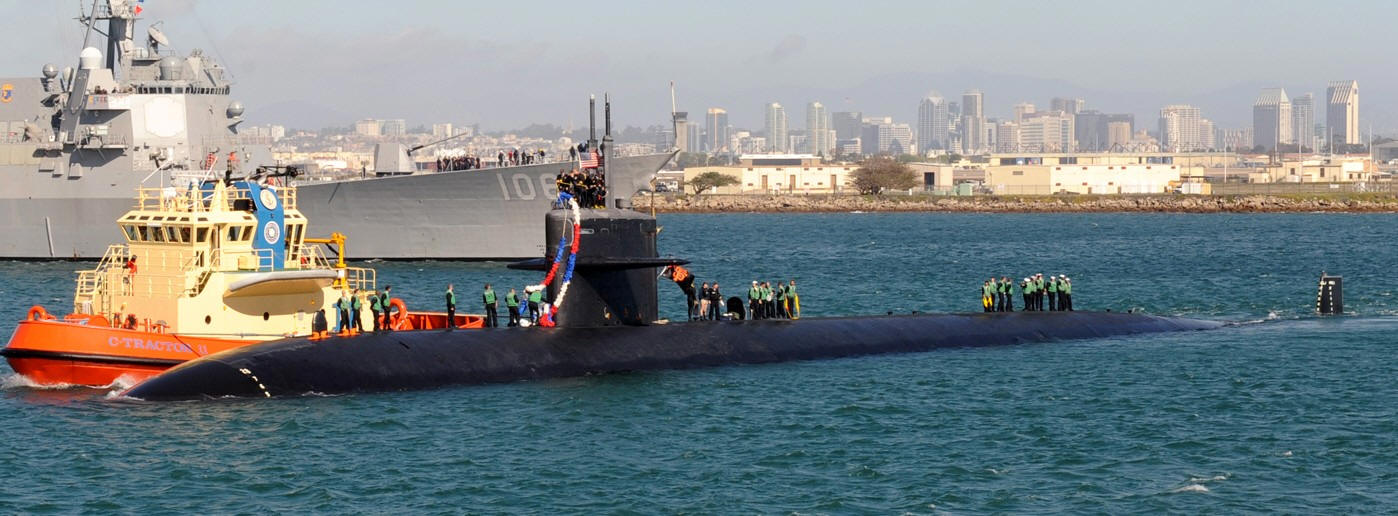
 The USS San Francisco (SSN-711) was involved in a major underwater collision on January 8, 2005, while operating in the Pacific Ocean. Here are some details about the incident:

Collision Details:

1. Location: The incident occurred approximately 350 miles southwest of Guam.

2. Depth: The submarine was operating at a depth of around 525 feet.

3. Speed: The USS San Francisco was traveling at a speed of about 20-25 knots.

4. Impact: The submarine struck an underwater mountain, which caused significant damage to its bow.


The USS San Francisco's collision with an underwater mountain on January 8, 2005, had severe consequences. The impact was so intense that the vessel almost sank, and the crew fought desperately to maintain positive buoyancy and surface. Unfortunately, Machinist's Mate Second Class Joseph Allen Ashley, 24, lost his life due to head injuries sustained during the collision.

Ninety-eight crew members were injured, with some suffering broken bones, spinal injuries, and lacerations. The submarine itself suffered significant damage, with ruptured forward ballast tanks and a severely damaged sonar dome. However, fortunately, the pressure hull and nuclear reactor remained intact.

The incident led to a thorough investigation, which revealed that critical navigational and voyage planning procedures were not followed. This oversight resulted in the captain being relieved of his command and six crew members receiving non-judicial punishment hearings. The investigation also highlighted the need for improved charting and navigation procedures to prevent similar incidents in the future.

Damage and Repairs:

1. Extent of damage: The collision damaged the submarine's bow, sonar dome, and forward ballast tanks.

2. Repair cost: Estimates suggested a repair cost of around $100-150 million.

3. Repair duration: The repairs took approximately 2 years to complete.

Investigation and Findings:

1. Investigation: The US Navy conducted an investigation into the incident.

2. Causes: The investigation found that inadequate navigation and charting procedures contributed to the collision.

3. Recommendations: The Navy implemented changes to its navigation procedures to prevent similar incidents.


Awards and Recognition:

1. Heroism: The crew's prompt response and damage control efforts prevented more severe consequences.

2. Awards: The crew received several awards, including the Navy Unit Commendation.

The USS San Francisco returned to service after repairs and continues to serve as a vital asset in the US Navy's submarine fleet and is currently a moored training ship at the Nuclear Power School.¹ After a storied career spanning over four decades, the submarine was decommissioned on May 15, 2022.

Its journey to this point was marked by a significant incident in 2005, where it collided with an underwater mountain while operating at flank speed, resulting in the loss of one life and injuries to 98 crew members. The submarine underwent extensive repairs, including a bow replacement, and returned to service in 2009.

Key Milestones:

- Decommissioning: May 15, 2022

- Conversion to Moored Training Ship: Completed in mid-2021

- Final Deployment: Returned to Point Loma in October 2016

- Collision Incident: January 8, 2005


Saturday, August 24, 2024

What really happened to Amelia Earhart?


There are several theories about Amelia Earhart's disappearance on July 2, 1937, during her attempted flight around the world. Here are some of the most popular ones:

Friday, July 26, 2024

Commemorating the life of an extraordinary Yorke Peninsula flier, Captain Harry Butler


Captain Harry Butler was an aviation pioneer said to be almost as famous as the premier in the years after World War One – wowing the people of Adelaide with spins, dives and loop-the-loops in his famous “Red Devil” Bristol monoplane. 

Sunday, December 31, 2023

Palestinean civilian death toll in Gaza soon to surpass Battle of Britain


Palestinean civilians are being killed at twice the rate of British civilians during the Battle of Britain and The Blitz.


In an interesting, if gruesome historical comparison, the civilian death toll among Palestinian residents of Gaza will soon surpass that of British civilians during the Battle of Britain.

Wednesday, November 17, 2021

Walford School for Girls supports women

Established in 1883, Walford Anglican School for Girls has a 128-year history in Unley. Lydia Adamson opened the school in her family's home and educated girls on Fisher Street and the school relocated to the present site on Unley Road in 1917.

Director of Marketing and Community Engagement aid the school's beginnings set the values that continue to be held today.

Mandy Hore - Deputy Principal

"The school began in the front room of a family home and I think that is evident as you get a family feeling when you walk through Walford," Karin said.

"We're a strong connected community, caring community and an extended family."

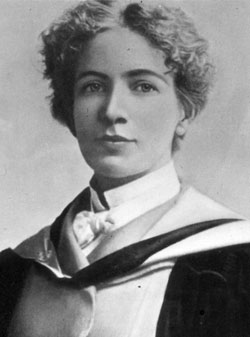
In 1912 Ellen Benham became the second headmistress of Walford. She was also a science pioneer.

The Walford Science Centre was named in recognition of her scientific achievements.

"It was radical at the time for girls to learn science and Ellen used to teach girls in the centre," Karin said.

"For women to have a career in science was extraordinary. They were living in history.

Ellen Ida Benham
(1871 - 1917)
"It is important for the current students to know the history of the school- to know where the previous women have been, where they came from and the pioneers they became."

Karin said old scholars of Walford mentor and support current students.

"Women support each other," Karin said.

"It is about appreciating that you are a part of something unique and creating a successful future which comes after you."

The current headmistress Rebecca Clarke is supportive and determined to continue the tradition for her students into the future.

Tijana Birdjan - Adelaide East Herald 


Monday, May 24, 2021

Not guilty verdict – 131 years later


Abandoned by her mother at four, brutally raped and beaten at seven and orphaned at nine – Elizabeth Woolcock might also have gone to her hanging death an innocent woman.

The execution platform loomed atop 13 heavy, wooden steps. Elizabeth Lillian Woolcock – barely 25 and shivering in a flimsy, white government-issue gown – waited below.

Saturday, June 20, 2020

Perfumes for my lady: How perfumes are made

The natural oil of flowers and aromatic plants are the heart of every good perfume, and in the extraction of these essences, petroleum-based chemicals play an important part. 

It is a moot point whether perfumes were first used as a means of overpowering other, and less pleasant, odours or whether they were employed by women in their age-old pastime of alluring men. If the latter, it would seem a supreme example of the male of the species having made a rod for his own back. We may never know the answer to that question, however, for despite extensive research, nothing definite has so far been discovered which provides a clear indication of when, where and by whom perfumes were first made.

The solvents plant at Berre L'Etang Refinery, near Marseille in the south of France,
produces solvents used in the perfume industry.

There is reason for believing that a race of people who lived in the period about 23000 BC used some form of petroleum as one of their principal toilet accessories, but for the first recorded use of perfumes, we have to go to Egypt, where, in an era variously placed at 5.000 to 3.500 BC., cosmetics of several kinds were used as offerings to the deities, as the chief agents for embalming the dead, and for purely aesthetic purposes.

A little later, at Heliopolis-the "City of the Sun', and now one of Cairo's most modem suburbs - the sun worshippers had their headquarters, and thrice daily in the temples there the priests offered perfumes to the Sun God; resins were burned at dawn, myrrh at midday and kaphi, a mixture of several aromatic ingredients of which the precise nature is unknown, at sunset. At the feet of the statue of the Goddess Isis an ox was sacrificed on ceremonial occasions, but the stench of the burning flesh proving obnoxious to priest and layman alike, the carcass was stuffed with aromatic gums and oils, made by the priests themselves, who surrounded the preparation of these perfumes with an aura of mystery thus helping to strengthen their power over a credulous populace.

The ancient Egyptians were the originators of the artificial bath, subsequently so greatly elaborated by the Greeks and the Romans. Nero was very addicted to the use of perfume, and heavy, voluptuous scents played an important part in the life of his Court.

In the days of Lucullus and Cicero, men used perfumes very extensively, but Caesar, on the other hand, would have little to do with men who came scented into his presence, and he is reputed to have said to one highly-perfumed follower, “I would rather you smelled of garlic".


The Persians greatly favoured heavily scented perfumes and added many new ranges to those already in use at the time-notably attar of roses.

In Britain, perfumes were introduced by the Romans, although there is some evidence that the ancient Briton used a primitive type of unguent. It was in the days of the Crusades, however, that perfumes really began to play a part in the social conscience of the country, when the knights, returning from the Holy Land, brought back with them samples of fragrance from the Middle East for their ladies.

By the time Queen Elizabeth I ascended the throne a wide variety of perfumes was in daily use, and the fashion grew steadily until Oliver Cromwell assumed power, when perfumes virtually disappeared. With Charles II restored to the throne, cosmetics and perfumes again came on the scene, and by the 18th century seem to have become something of a menace, for a Bill was introduced into Parliament containing a clause which read: "That all women of whatever age, rank, profession or degree, whether virgins, maids or widows, that shall impose upon, seduce, or betray into matrimony any of His Majesty's subjects by scents, paints, cosmetics, waxes, artificial teeth, false hair, Spanish wool, iron stays, hoops, high heeled shoes, bolstered hips, shall incur the penalty of the law in force against witchcraft and like misdemeanours, and that the marriage, upon conviction, shall stand null and void”. No wonder men termed those 'the good old days'!

In medieval France and Spain, perfumery became exceedingly popular and many exotic uses were discovered. In France, courtiers were the principal users, and in some courts each day of the week had its own distinctive perfume. Fashion made many demands on the ingenuity of the parfumeur, and at one period in France, Italy and England even dictated that gloves must be perfumed. This fashion became so widespread and lasted for such a long time that the art of the scent maker and that of the glove manufacturer became combined.

THE MANUFACTURE OF PERFUMES


Natural perfumes are a product of plant metabolism, and their highest form is found in the scent of fresh flowers, due to the occurrence in the petals of minute traces of essential oils. In the rose and in lavender this is in the free state, but in jasmine and the tuberose it is present in the form of a glucoside. These fragrant constituents are distributed in various parts of a number of plants, such as the blossoms, leaves, fruits, seeds, the bark, the wood and, in certain types of plant, the gums and oleo-resins.

The most popular scents are undoubtedly those made from blends of perfumes extracted from flowers, and this is an industry-or perhaps it should be termed an art—which is predominantly French. This is understandable, for it is a trade peculiarly suitable to the French temperament; moreover, a prerequisite for the extraction of perfume from flowers is flowers, and where better may these be grown in luxuriant abundance than on the Côte d'Azur?

For the past one hundred years at least, Grasse, that pleasant town clinging to the mountainside behind Cannes, has been the centre of the extraction industry. Over a wide area around the town most of the land is given over to floriculture, and from spring to autumn the countryside is a patchwork of colour, varying from the golden hues of the mimosa in the early part of the year, to the creamy-white of jasmine and the darker shades of lavender as summer draws to a close.

It has been estimated that to obtain just one kilogram of perfume, 8oo to 1,000 kilograms of blossoms are required, and altogether something like 1,500 tons of flowers are treated every year in the score or so of factories in Grasse. Every morning, large quantities of freshly-picked blooms are delivered to these factories. My last visit to Grasse coincided with the jasmine season, and in one of the largest factories in the town I saw great mounds of fragrant blossoms being processed.

At one time the perfume was extracted from the flowers by treating them with steam in a tort. This method served very well with the Ludy type of blossom, such as lavender, but For the more delicate flowers a much more elaborate process, known as enfleurage, was used, the blossoms being placed on sheets of less which ad been covered with a thin layer effect. When the fat has become saturated Viu perfume from the flowers, the perfume was extracted from the fat with alcohol which was subsequently removed from the perfume by distillation. This process, or a slightly more modern version of it, is still used, but it is very costly.

HOW PETROLEUM PLAYS ITS PART


In the early years of this century, one of the leading perfumers in Grasse hit upon the idea of using a volatile solvent for the continuous extraction of the perfume from flowers, and employed ethyl ether for this purpose. This was a great improvement, but not the complete answer, and it was not long before the ethyl ether was replaced by a special spirit, known as Essence B, supplied by the Shell Berre Petit Couronne Refinery.

The process is briefly as follows. Large quantities of flowers are placed upon perforated trays in air-tight percolators. The Essence B then circulates through the apertures in the trays, becomes impregnated with the natural perfume, and is then drawn off from the bottom of the percolators and pumped into a still where, under vacuum, the essence is distilled, the perfume remaining at the bottom of the retort. This perfume is a thick, syrupy liquid, known as 'concrete'. This 'concrete' is then treated with alcohol to remove certain impurities, and after distillation, the 'absolute' perfume is obtained. The utmost care is necessary when refining Essence B, as the slightest odour would render it unsuitable for the treatment of the flowers.

In addition to the production of the natural oils and concretes, several of the Grasse factories now produce synthetic perfumes, as the output of natural oils is insufficient to meet the demands of the perfume industry.

Among the synthetic oils manufactured at Grasse are those known as ionones, the basis of the oil of violets. Acetone of extreme purity, produced at the Shell Saint-Gobain chemical plant at Berre L'Etang, near Marseilles, has played a leading part in the large-scale development of ionone synthesis. Tertiary butyl alcohol is used in the manufacture of synthetic musk, and both the natural and the synthetic branches of the industry are now using isopropyl ether and isopropyl alcohol (also supplied from Berre Refinery) as extraction solvents,

THE ART OF THE PERFUMER


As even on the Riviera flowers do not bloom all the year-round, the question may well be asked, what goes on in the Grasse perfumeries during the winter months? The answer is simple enough. When flowers are not available, other parts of the plant are processed. I should make it clear here that the concretes and absolute oils are only part of the ingredients necessary for the making of perfumes. The scents one buys in a shop are very complex blends of many of the basic materials produced in Grasse. It is, for example, necessary to blend several absolute oils and then to add either a little musk or a little ambergris to impart 'body' to the perfume. A trace of civet may also be added, for strangely enough this pungent odour acts as a foil to the blend of wholly delectable floral perfumes, which a woman uses to enhance her charm or a man buys for her as a means of winning her favours - or as a peace offering,

In the brief Riviera winter, then, orris root, oak moss, aromatic barks, gums and violet leaves are processed and are used mostly as fixatives, petroleum again playing an important part, usually in the form of a solvent.

Grasse provides the basic materials for the blender, who brings to his art subtlety, refinement, restraint and innate good taste. The imagination of the true artist can be given free rein, as the composition of a perfume is a creative achievement. The French hold, and with considerable justification, that there is only one place in the world where the artist in perfumes will find his true inspiration and be able to create truly distinctive and elegant perfumes. And that, of course, is Paris.
Perfumes are inclined to be temperamental, and a scent that suits one woman admirably may fail completely with another person. One type of perfume may be ideal for a blonde and another for a brunette, and most women know how to select their perfumes with discretion. Menfolk who are contemplating giving their wives or girlfriends (or both) perfume for Christmas would, therefore, be well advised to take care with their purchases. But having chosen the right one, no gift is more welcome to the majority of women.

K.B.S.

(Reproduced from Shell Magazine. 1955)